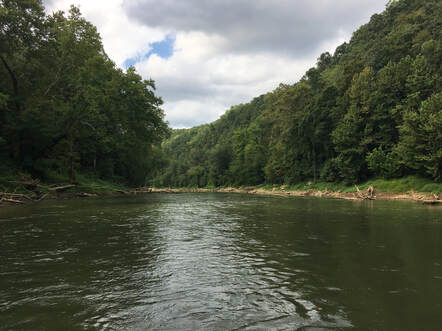
 Green River near Boardcut Island After three years, dam removal is paying off Over Thanksgiving weekend 2016, the structure named Lock and Dam 6 on the Green River failed, meaning it cracked open to let the water run through. This failure of the century-old structure led to a success for paddlers, anglers, and the ecology of the longest river within Kentucky’s borders. KWA was a part of the team that had been planning to remove three dams from the Green and Barren Rivers and now had our chance to get the first one out. In April 2017, the structure was completely removed and approximately 10 miles of Green River was free flowing again. Biodiverse Green The Green River drainage in central Kentucky is one of the most biologically diverse rivers in the Southeast United States, with over 150 species of fish, over 70 species of mussels, and 25 species of crayfish. Dozens of these species are considered unique and imperiled, such as the stargazing minnow (Phenocobius uranops), fanshell mussel (Cyprogenia stegaria), and bottlebrush crayfish (Barbicambarus cornutus). Unfortunately, a series of navigational dams have existed within the lower half of the mainstem of the Green River for over 100 years, which has impacted the ecosystem. Dam Damages There are nearly 90,000 dams in the U.S.; approximately 1,100 are in Kentucky. Although dams have provided benefits in navigation, flood control, and recreation, their presence within the waterways has been profoundly negative on the natural aquatic fauna, water quality, habitat, and hydrology. Dams disrupt the connectivity of streams and rivers, fragment populations, alter hydrology and sediment transport, and decrease water quality. Overall, dams are considered one of the most substantial threats to riverine ecosystems, often resulting in decreased biodiversity and shifts in ecological functions. The removal of dams has increased over the last couple of decades in the United States as the purpose, need, and integrity of the infrastructures has decreased. Dams have become viewed more as liabilities and ecological hazards than as beneficial entities, and a shift in focus towards river restoration, species conservation, and sustainability has propelled the removal of them. Approximately 1,200 dams have been removed in the U.S., with 4 dams removed in Kentucky. Although it is perceived that the removal of dams is beneficial to the river ecosystem, less than 10% of the dams removed in the U.S. have been monitored and assessed to document the benefits obtained from the removals. Given the diversity and importance of the Green River, the removal of the old, obsolete, and hazardous dams within the drainage are a priority for resource managers. More Dams to Fall When lock and dam #6 (Dam 6) was removed, it was the first step in a process that began years before with studies and permitting projects that allowed for the removal of Dams 5 and 6 on the Green River and Barren River Dam 1. KWA and partners US Fish & Wildlife Service, US Army Corps of Engineers, Kentucky Fish & Wildlife, and The Nature Conservancy are working on plans to remove the remaining two dams, which will set free much more of these beautiful, biodiverse rivers for those of us that love them and the wildlife that depend on the rivers for their home.
Comeback Story
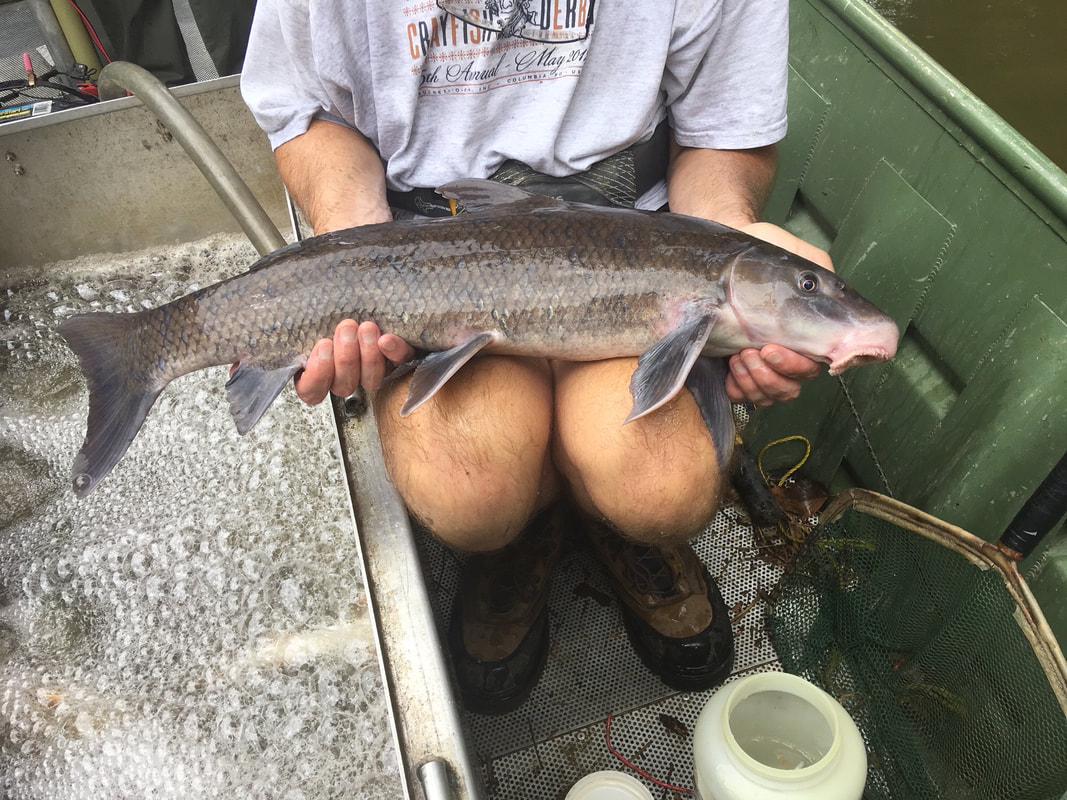
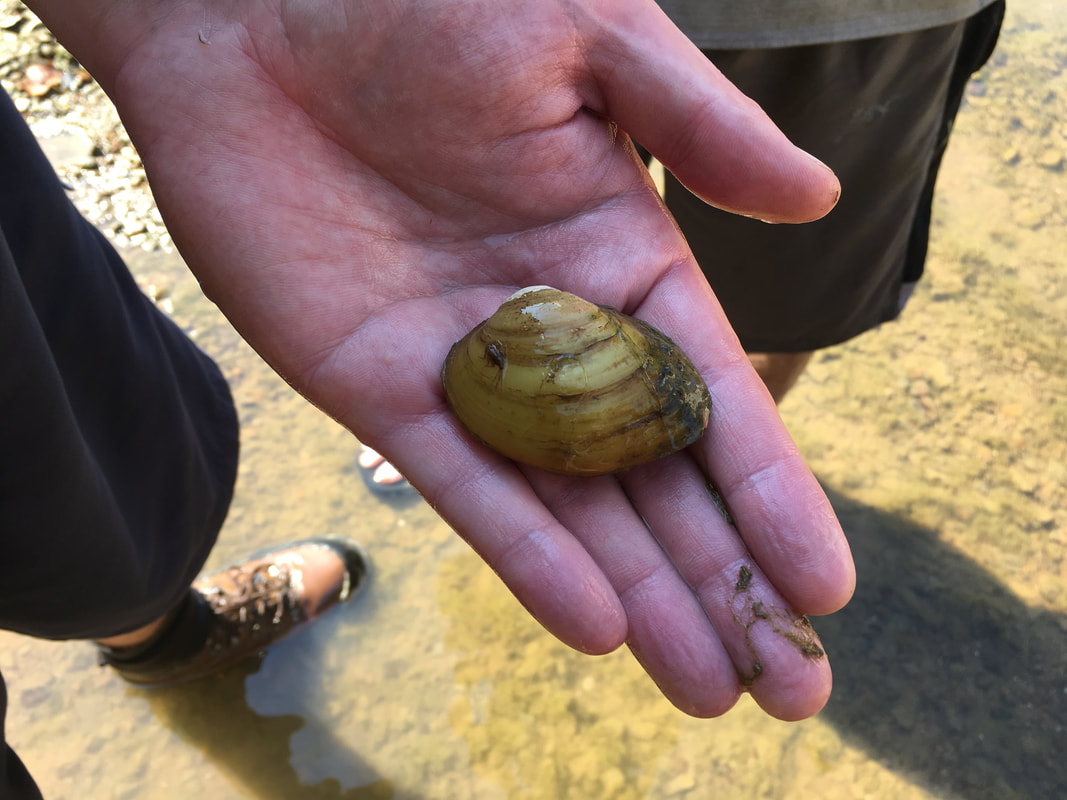
Since 2017, the Office of Kentucky Nature Preserves (KNP) has led the monitoring effort of the response and recovery of the river following the removal of Dam 6 and the pending removal of Dam 5. The ecological assessment project studies how the fish, mussel, macroinvertebrate, riparian zone vegetation, and instream habitat are changing within 45 miles of the river corridor impacted, downstream and upstream, of the Green River dams. The project aims to document and measure the ecological response of the river ecosystem over time and determine whether diversity and ecological quality have improved. Each component of the study is in different stages of data processing and is ongoing, but survey efforts so far have encountered 66 species of fish and 35 species of mussels, with four federally listed species, such as sheepnose (Plethobasus cyphyus) and rough pigtoe (Pleurobema plenum). Preliminary results indicate habitats and diversity are greater in the segments of river that resemble more natural conditions. In addition, downstream of Dam 5 several fish species, such as American eel (Anguiila rostrata), blue sucker (Cycleptus elongatus), and bowfin (Amia calva) occur, but are rare or absent upstream of the dam. It is anticipated their dispersal and abundance would increase further upstream once Dam 5 is removed. The mussel community was indicative of the hydrology of the river and has been dominated by species tolerant of pool habitat upstream of the dams. The vegetation surveys indicated the newly exposed bank channel was in early succession, although unique ecological communities were discovered in some sections of river minimally disturbed by the dams. Monitoring efforts will continue for many years to come as the river changes and stabilizes to the new hydrological changes, but early results are encouraging that the river will achieve a degree of recovery. For more information on the Office of Kentucky Nature Preserves’ projects see annual reports here.
0 Comments
Leave a Reply. |
 RSS Feed